Lily Pollen Under the Microscope
Lily Pollen (Whole Mount), Lilium
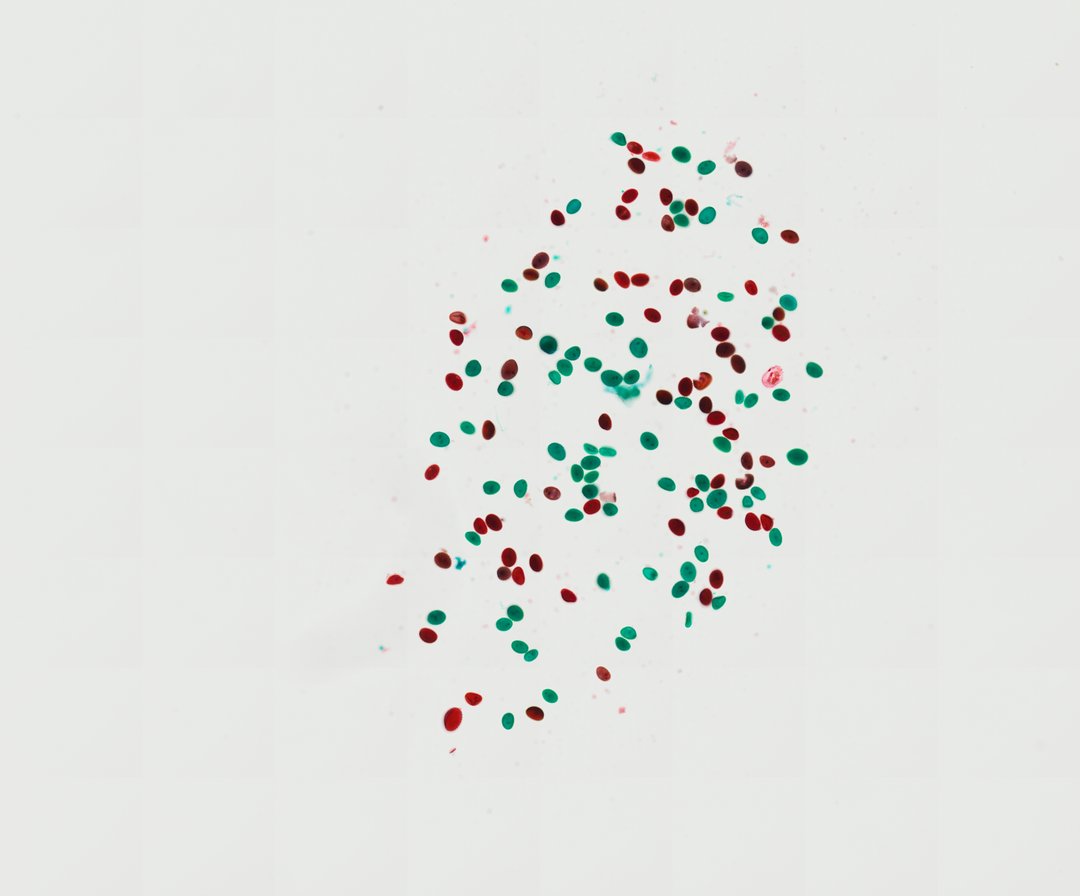
This slide shows mature lily pollen grains stained with safranin and fast green. Lily pollen is large for pollen, which makes it a good first look at the male part of the flowering plant life cycle.
A whole mount preparation of mature lily pollen grains (Lilium W.M.) double-stained with Safranin and Fast Green. The individual microspores display typical monocotyledonous pollen morphology, featuring oval to ellipsoidal shapes with a distinctive single elongated aperture (monosulcate). Differential counterstaining highlights the dual-layered sporoderm wall structure, with the outer sporopollenin-rich exine exhibiting intricate reticulate surface sculpturing and differential stain affinity, while enclosing the inner intine layer and cytoplasm. These pollen grains represent the male gametophyte stage of the angiosperm life cycle, prepared for dispersal and subsequent germination upon receptive stigmatic surfaces.
What to look for
- Pollen grains: Oval grains scattered across the slide.
- Furrow (aperture): A single long groove along each grain, typical of monocot pollen.
- Exine: The tough outer wall, with a net-like surface pattern.
- Intine and contents: The thin inner wall and the cell contents inside the grain.
At each magnification
Low power (about 4x)
Many small oval grains scattered across the slide.
Medium power (about 10x)
The oval shape of each grain and the single furrow.
High power (about 40x)
The net-like pattern on the outer wall.
Questions and answers
What does lily pollen look like under a microscope?
Lily pollen grains are large ovals with a single long furrow. Their tough outer wall has a net-like pattern that shows up well at high magnification.
What is pollen made of?
A pollen grain is a tiny male plant (male gametophyte) inside a tough wall. The outer wall, the exine, is made of sporopollenin, one of the toughest natural materials, which protects the cells inside.
- Category
- Botany & Plants
- Scan magnification
- 20x
- Stain
- Safranin / Fast Green
- Tags
- lily pollen whole mount, Lilium, lily pollen, pollen grains, microspores, monosulcate pollen
Viewing this slide in class
This is a scan of a real prepared slide, not a simulation or a drawing. On StudyScope you can pan from the whole slide down to individual structures, always in focus, and measure them in real micrometers with the calibrated ruler. Present it live and every student screen follows your view and annotations. Students join with a room code on Chromebooks, iPads, or any browser, with no accounts.