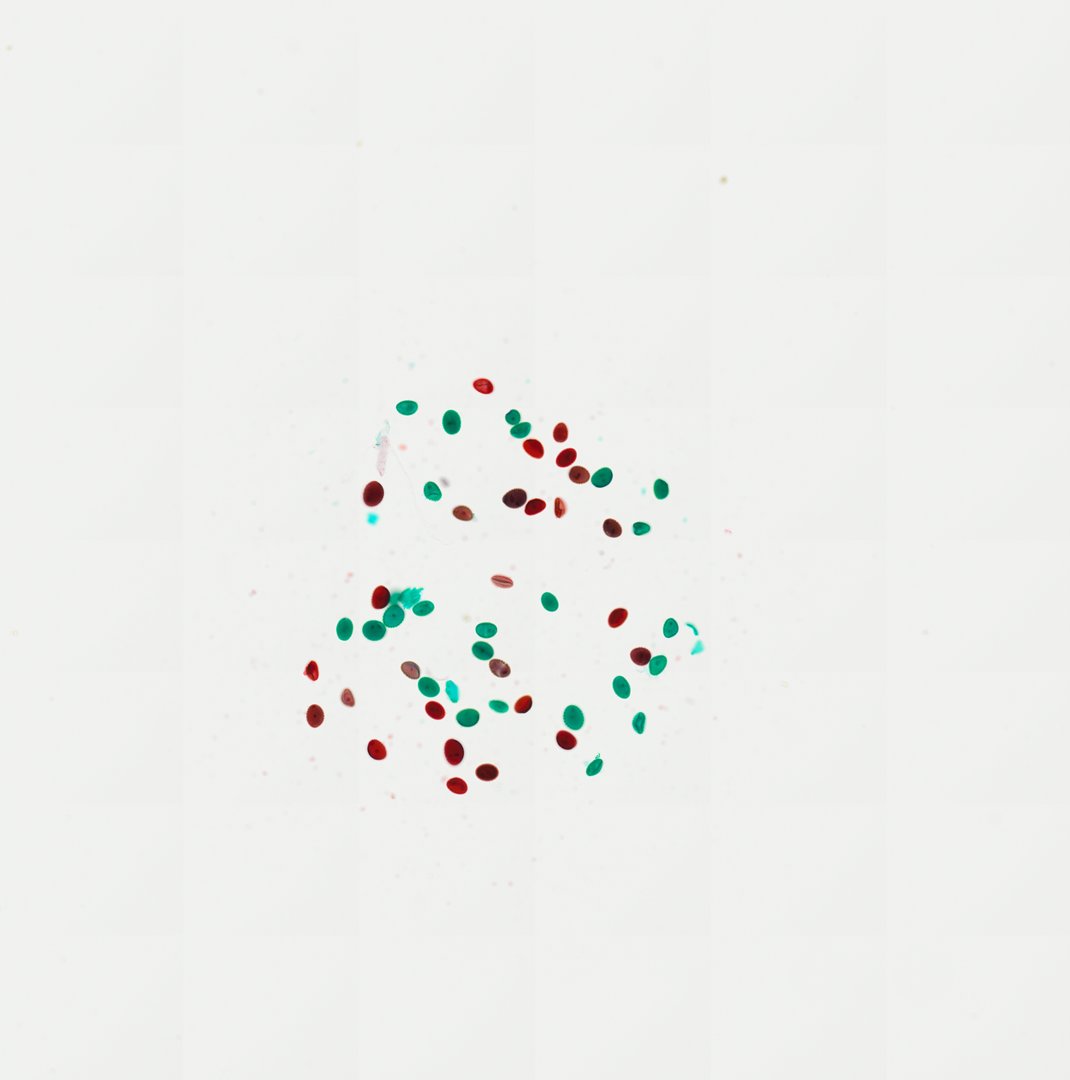
Short answer: Pollen grains are easy to tell apart under the microscope by shape and openings. Lily pollen is a large oval with one long furrow, typical of monocots. Luffa pollen is nearly round with three openings, typical of dicots. Pine pollen has a central body with two air sacs, a shape often compared to Mickey Mouse, which helps it ride the wind. The colors on a stained slide come from the stain, not the pollen itself.
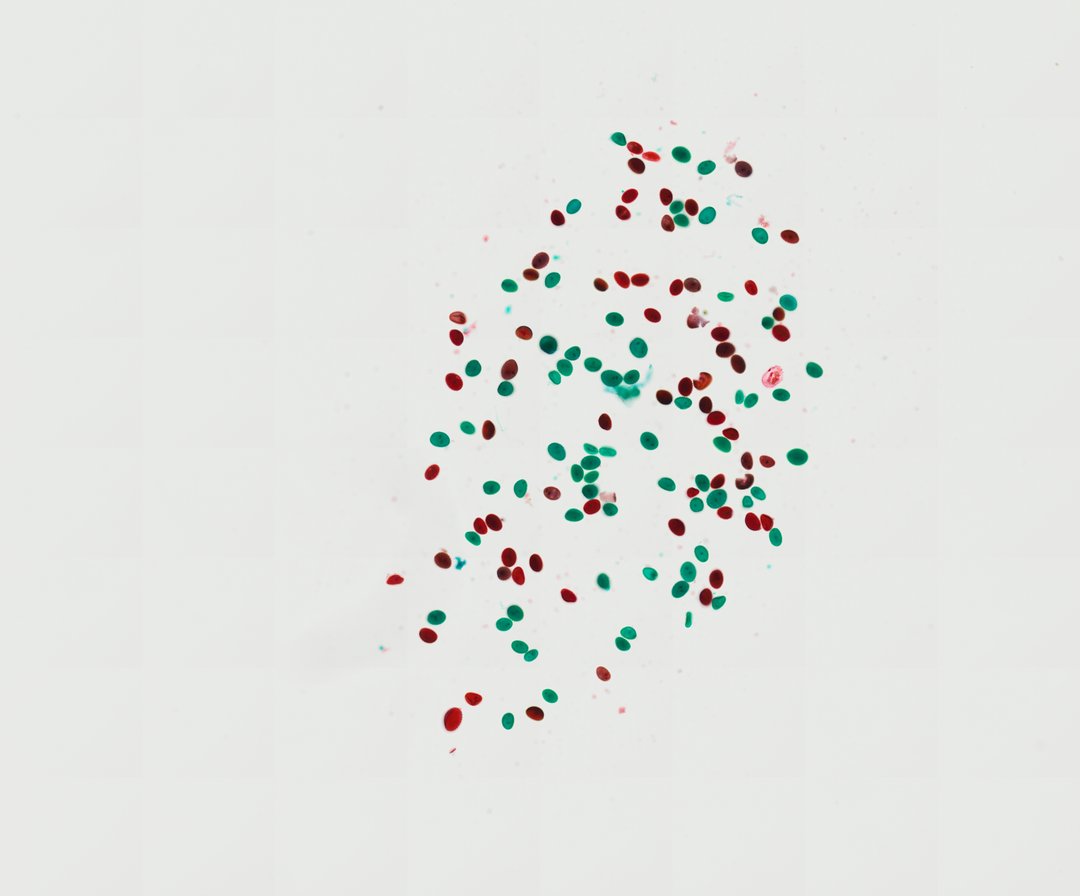 Lily Pollen (Whole Mount)LiliumSafranin / Fast Green
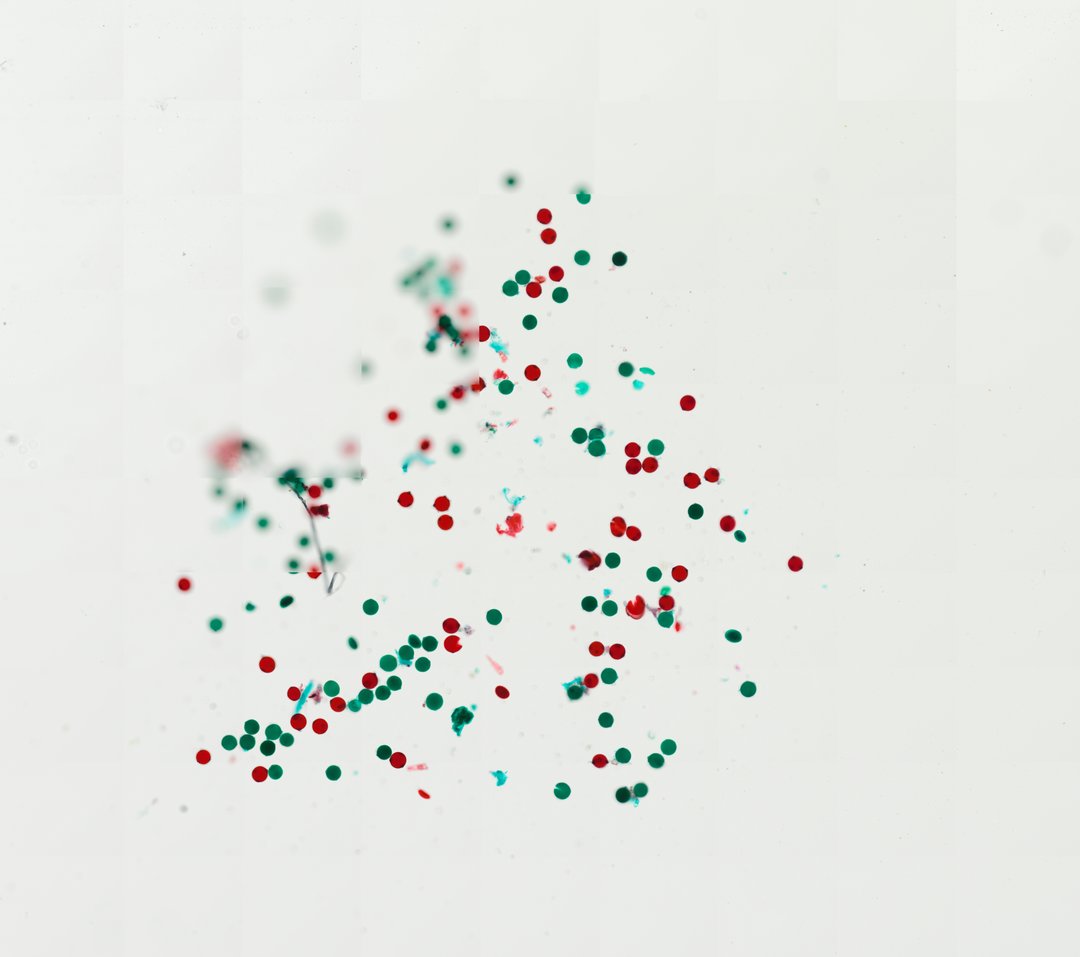 Luffa Pollen (Whole Mount)Luffa aegyptiacaSafranin / Fast Green
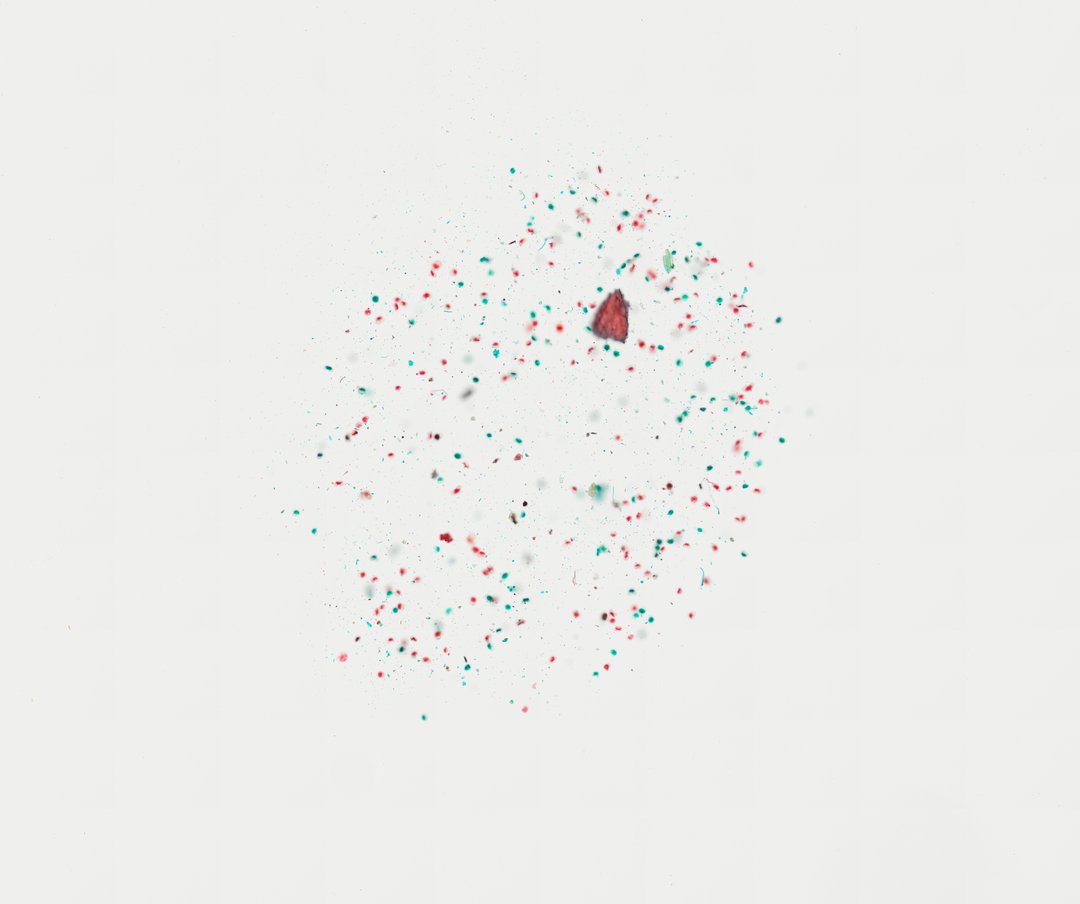 Pine Pollen (Whole Mount)PinusSafranin / Fast Green
Lily, luffa and pine pollen at a glance
| Pollen | Plant group | Shape | Key feature |
|---|---|---|---|
| Lily | Monocot flowering plant | Large oval | One long furrow and a net-like outer wall |
| Luffa | Dicot flowering plant | Nearly round, thick wall | Three openings where a pollen tube can grow out |
| Pine | Conifer (no flowers) | A body with two round wings | Two air sacs that keep it light in the wind |
What to look for in a pollen grain
- Exine: the tough outer wall. Its bumps, ridges and net patterns differ from plant to plant, which is how scientists identify pollen.
- Openings (apertures): furrows or pores in the wall where the pollen tube comes out. Count them: one furrow on lily, three openings on luffa.
- Nuclei: one or two dark spots inside many grains. A pollen grain is a tiny male plant, and these are its cells.
- Air sacs: only on pine. Many grains on this scan are tilted or a little out of focus, so pan across for ones lying flat with both sacs showing.
Why are some grains red and others green? The slides are double stained with safranin and fast green, and each grain takes up mostly one of the two dyes. Fresh lily pollen is orange.
Where pollen is made, and what it does next
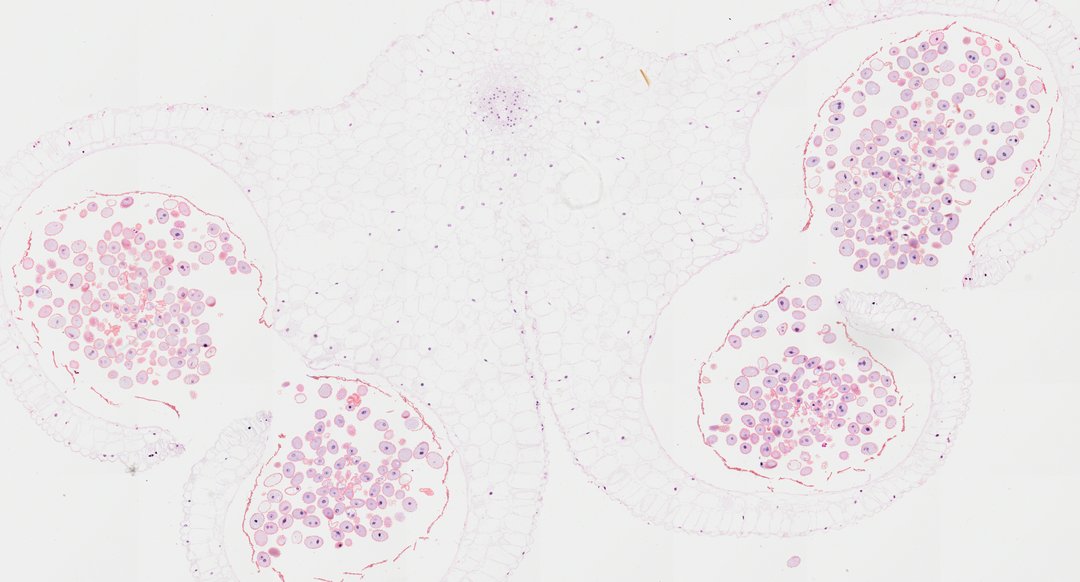
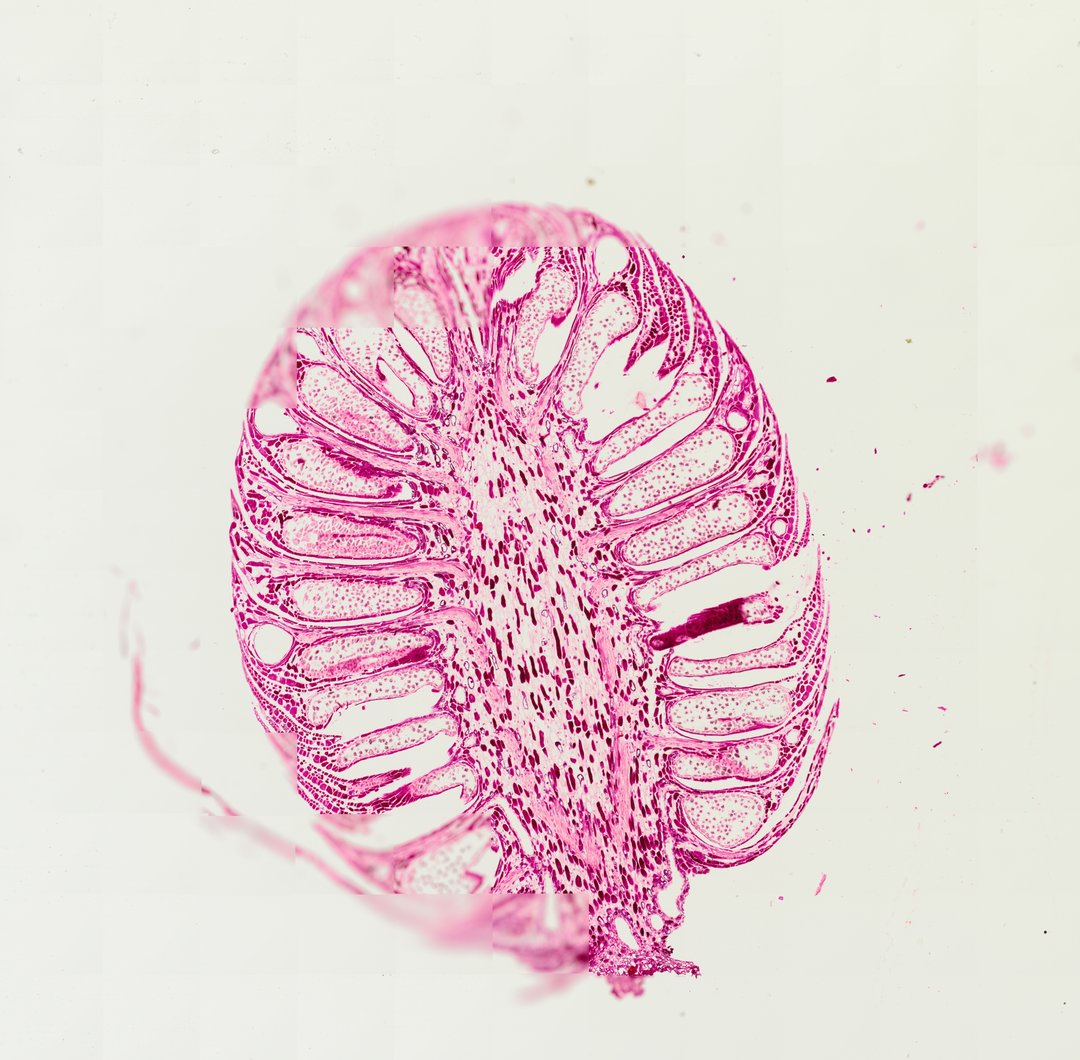
Pollen is the end of one story and the start of another. A lily anther cross section shows the four pollen sacs where it develops, and a young male pine cone shows how conifers make it without flowers. On germinating pollen, look for grains that have started to grow a pollen tube, the thread that carries sperm cells to the egg.
For a pollination tie-in, the pollen-carrying leg of a honeybee shows the pollen basket and combs a bee uses to carry pollen home.
Using the slides in class
- Put the three pollen slides side by side and have students sort them into monocot, dicot and conifer from the grains alone.
- Measure one grain on each slide with the ruler. Every slide is calibrated, so the sizes are in real micrometers.
- Present a slide live while students follow on their own screens with a room code, with no student accounts.
Questions and answers
What does pollen look like under a microscope?
Pollen grains are tiny grains with a tough, patterned outer wall. Their shape depends on the plant: lily pollen is a large oval with one furrow, luffa pollen is nearly round with three openings, and pine pollen has a central body with two air sacs.
Why does pine pollen look like Mickey Mouse?
Pine pollen has two round air sacs on the sides of its central body. Seen from some angles, the sacs look like ears on a head. They make the grain light, so it can float on the wind to female cones.
How is monocot pollen different from dicot pollen?
Most monocot pollen, such as lily, has a single furrow. Most dicot pollen, such as luffa, has three openings or three furrows. Counting the openings is a quick way to tell the two groups apart.
Is pollen alive?
Yes. A pollen grain is a tiny male plant (a male gametophyte) inside a tough wall. The dark spots inside many grains are its nuclei. When it lands on the right flower, it grows a pollen tube to deliver sperm cells to the egg.
More guides
- Monocot vs dicot stems compared
- Frog, human, chicken and fish blood compared
- Virtual microscope, simulator or digital microscope?
- Using a microscope on a Chromebook
- How to identify the stages of mitosis in an onion root tip
- Cheek cells vs onion cells
- Leaf layers and stomata guide
- Pond water organisms identification guide
- How to identify tissue types
- How to measure cell size
- Insect mouthparts compared
- Worm body cavities compared