Pine Pollen Under the Microscope
Pine Pollen (Whole Mount), Pinus
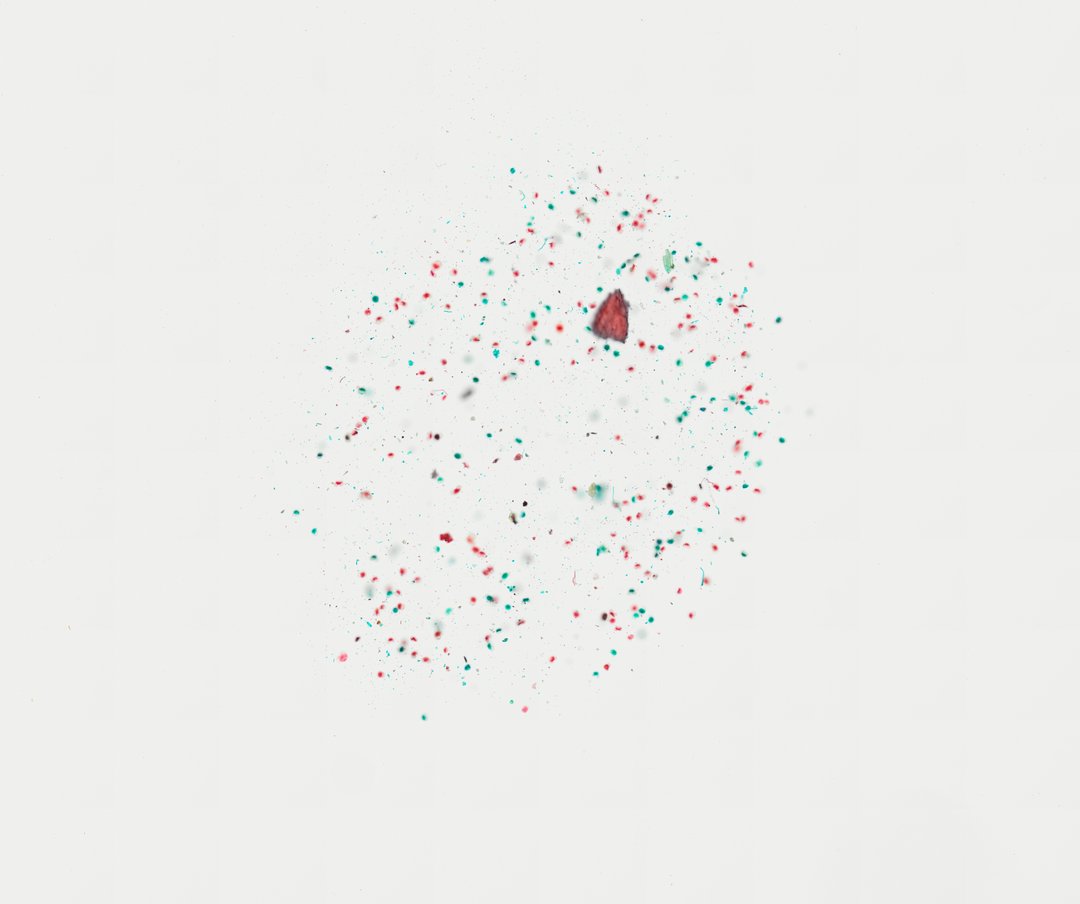
This slide shows pine pollen grains stained with safranin and fast green. Pine pollen has two air sacs that help it float on the wind, giving it a well-known shape.
A whole mount preparation of pine pollen grains (Pine pollen W.M.) double-stained with Safranin and Fast Green. The scattered pollen grains represent microgametophytes produced within male microstrobili. High-magnification examination reveals the characteristic 'Mickey Mouse' morphological structure of pine pollen, featuring a central body flanked by two prominent air bladders (sacci or wings) formed by inflation of the exine. These aerodynamic sacci increase buoyancy in air currents to facilitate wind pollination (anemophily) across conifer ecosystems.
What to look for
- Central body: The main part of the grain, which holds the living cells.
- Air sacs (sacci): Two rounded, balloon-like wings on either side of the body.
- Pollen wall: The tough outer layer, which puffs out to form the air sacs.
At each magnification
Low power (about 4x)
Many tiny grains scattered across the slide.
Medium power (about 10x)
The three-lobed outline of each grain.
High power (about 40x)
The body and the two air sacs, which often look like a cartoon mouse head.
Questions and answers
Why does pine pollen look like Mickey Mouse?
Pine pollen has a central body with two round air sacs on its sides. From some angles, the sacs look like ears on a head, which is why it is often compared to Mickey Mouse.
What are the air sacs on pine pollen for?
The air sacs make pollen lighter and help it stay in the air longer. Pines are pollinated by the wind, so this helps pollen travel from male cones to female cones.
- Category
- Botany & Plants
- Scan magnification
- 20x
- Stain
- Safranin / Fast Green
- Tags
- pine pollen whole mount, Pine pollen W.M., Pinus, pine pollen, winged pollen, sacci
Viewing this slide in class
This is a scan of a real prepared slide, not a simulation or a drawing. On StudyScope you can pan from the whole slide down to individual structures, always in focus, and measure them in real micrometers with the calibrated ruler. Present it live and every student screen follows your view and annotations. Students join with a room code on Chromebooks, iPads, or any browser, with no accounts.