Pine Young Staminate Cone Under the Microscope
Pine Young Staminate Cone (Longitudinal Section), Pinus
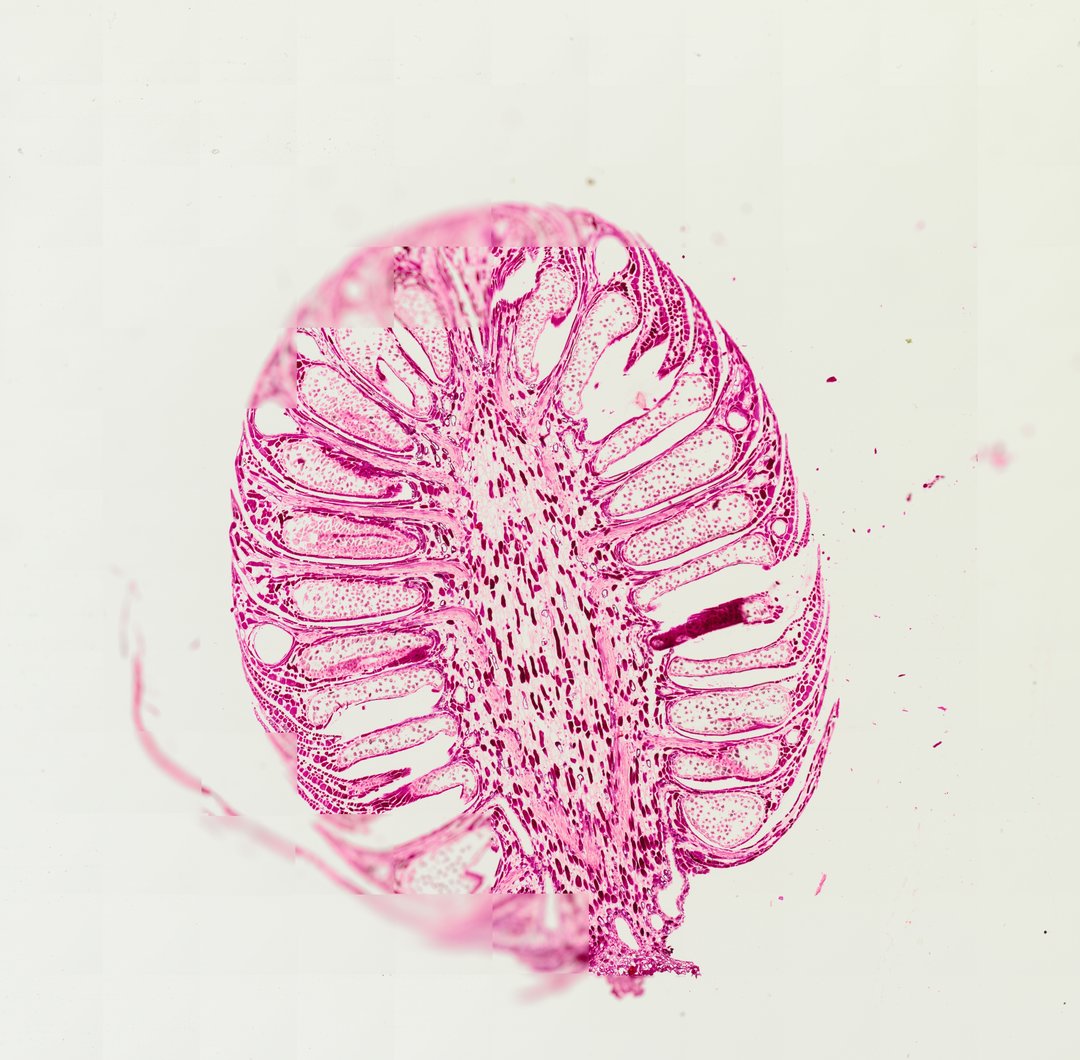
This is a lengthwise section of a young male pine cone stained with safranin. Male pine cones make pollen, and this slide shows the pollen sacs where it develops.
A longitudinal section of a young male pine cone or staminate microstrobilus (Pine Young Staminate, Cone L.S.) stained pink/magenta with Safranin. The central axis bears spirally arranged microsporophylls, each carrying microsporangia (pollen sacs) filled with developing microspores (pollen grains). Upon maturation, these pollen grains develop winged air sacs (sacci) characteristic of pine pollen to facilitate wind-assisted pollination. This section demonstrates gymnosperm male reproductive anatomy and microsporogenesis.
What to look for
- Cone axis: The central stalk running up the middle of the cone.
- Microsporophylls: Small scales arranged in a spiral around the axis.
- Pollen sacs (microsporangia): Rounded chambers on the underside of each scale.
- Developing pollen: Many small cells packed inside the pollen sacs, stained pink to red.
At each magnification
Low power (about 4x)
A narrow cone with scales along a central axis.
Medium power (about 10x)
Pollen sacs on each scale, full of developing pollen.
High power (about 40x)
Individual developing pollen grains inside a sac.
Questions and answers
What does a male pine cone look like under a microscope?
A longitudinal section of a male pine cone shows a central axis covered with small scales in a spiral. Each scale has pollen sacs on its underside, packed with developing pollen grains.
Where does pine pollen come from?
Pine pollen is made in the pollen sacs of small male cones. When the pollen is mature, the sacs split open and release clouds of pollen into the wind.
- Category
- Botany & Plants
- Scan magnification
- 20x
- Stain
- Safranin
- Tags
- pine young staminate cone, Pine Young Staminate, Cone L.S., Pinus, staminate cone, male pine cone, microstrobilus
Viewing this slide in class
This is a scan of a real prepared slide, not a simulation or a drawing. On StudyScope you can pan from the whole slide down to individual structures, always in focus, and measure them in real micrometers with the calibrated ruler. Present it live and every student screen follows your view and annotations. Students join with a room code on Chromebooks, iPads, or any browser, with no accounts.