Aphis Under the Microscope
Aphis (Whole Mount), Aphis sp.
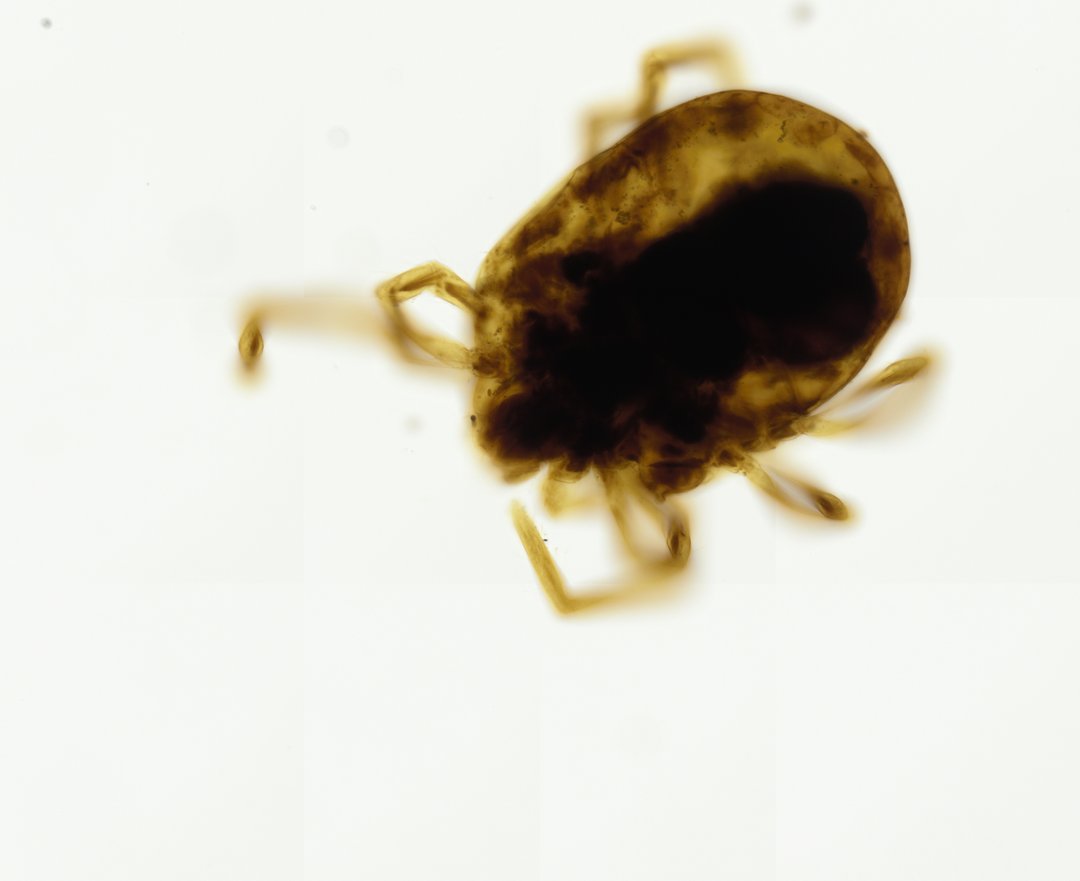
This is a whole aphid, a tiny sap-sucking insect, mounted flat on a slide. Classes look at aphids to see a soft-bodied insect with mouthparts built for piercing plants and drinking sap.
A whole mount (W.M.) preparation of an aphid (labeled Aphis W.M.). The specimen exhibits typical hemipteran morphology, including a soft pear-shaped body, jointed walking legs, and piercing-sucking mouthparts.
What to look for
- Pear-shaped body: A soft, rounded body that is wider toward the rear.
- Piercing-sucking mouthparts: A slender beak under the head used to pierce plant stems and leaves.
- Antennae: Long, thin, jointed antennae extending forward from the head.
- Legs: Six thin jointed legs attached to the thorax.
- Cornicles: In many aphids, a pair of short tubes stick out from the back of the abdomen.
At each magnification
Low power (about 4x)
The whole aphid with its rounded body, legs, and antennae.
Medium power (about 10x)
The beak-like mouthparts, leg joints, and the tubes near the rear of the abdomen.
High power (about 40x)
Fine hairs, leg claws, and the segments of the antennae.
Questions and answers
What does an aphid look like under a microscope?
An aphid has a soft, pear-shaped body, six thin legs, long antennae, and a slender beak for sucking plant sap. Many aphids also have two small tubes, called cornicles, pointing backward from the abdomen.
Why are aphids studied in biology class?
Aphids are common garden pests that feed on plant sap, so they connect insect anatomy to real ecology and agriculture. Their piercing-sucking mouthparts are a clear example of how mouthparts match an insect's diet.
- Category
- Invertebrates
- Scan magnification
- 20x
- Stain
- Unstained
- Tags
- Aphis W.M., Aphis w.m., Aphis whole mount, Aphis, Aphid, Aphis sp.
Viewing this slide in class
This is a scan of a real prepared slide, not a simulation or a drawing. On StudyScope you can pan from the whole slide down to individual structures, always in focus, and measure them in real micrometers with the calibrated ruler. Present it live and every student screen follows your view and annotations. Students join with a room code on Chromebooks, iPads, or any browser, with no accounts.