Dragonfly Leg Under the Microscope
Dragonfly Leg (Whole Mount), Anisoptera
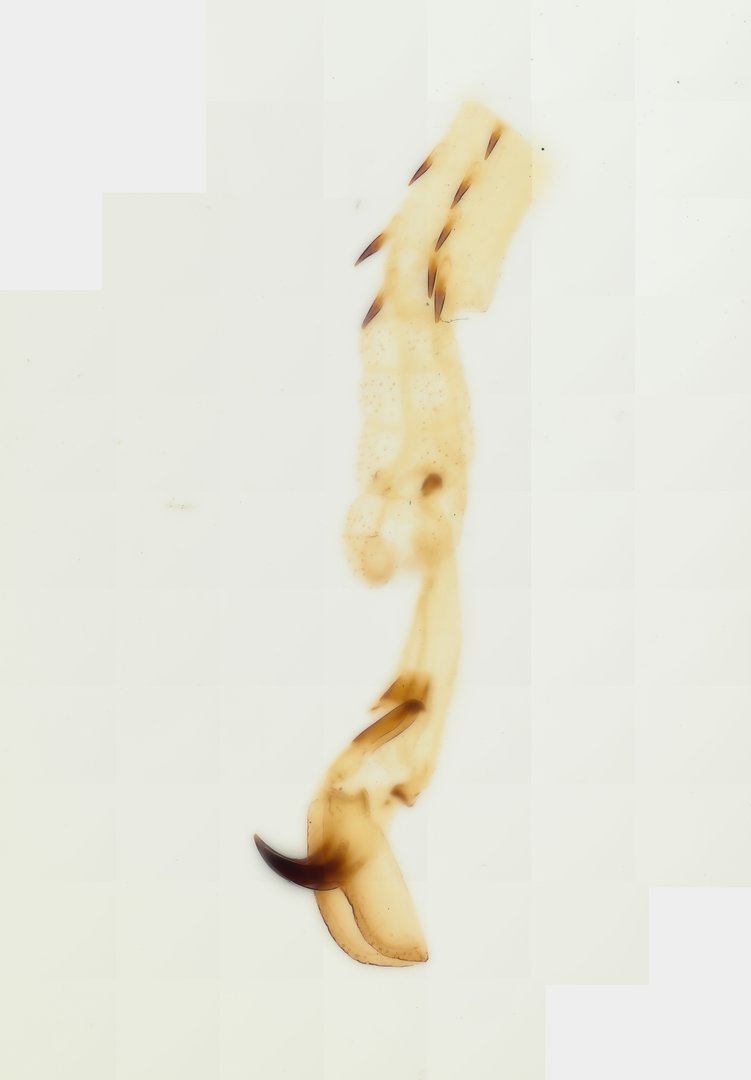
This is a dragonfly leg mounted whole. Dragonfly legs are built for grabbing prey and perching rather than walking, and the spines along them show that clearly.
This whole mount preparation displays the appendicular structure of a dragonfly leg (order Odonata, suborder Anisoptera). Dragonfly legs are specialized raptorial appendages adapted primarily for perching and prey capture during flight rather than walking. The preparation features segmented podomeres, highlighting the tarsal segments terminating in a pair of heavily sclerotized, curved tarsal claws (ungues). Prominent, stiff cuticular spines and setae project along the podomeres, serving as tactile mechanoreceptors and aiding in holding prey within the feeding basket formed by the legs during aerial hunting. Brightfield illumination reveals the amber-colored, sclerotized chitinous exoskeleton and detailed surface microstructures of the appendage.
What to look for
- Leg segments: Long, jointed sections of amber-colored exoskeleton.
- Spines: Rows of stiff, pointed spines along the leg segments.
- Tarsus: The small foot segments near the end of the leg.
- Tarsal claws: A pair of curved, dark claws at the tip for gripping.
At each magnification
Low power (about 4x)
The long leg with visible joints and a fringe of spines.
Medium power (about 10x)
The rows of spines and the foot segments.
High power (about 40x)
The shape of the claws and fine hairs on the cuticle.
Questions and answers
Why do dragonfly legs have spines?
Dragonflies catch other insects in the air. They hold their spiny legs together like a basket to trap prey, and the spines keep the prey from escaping.
Can dragonflies walk?
Dragonflies are poor walkers. Their legs are mostly used for perching and catching prey, while flying is how they get around.
- Category
- Invertebrates
- Scan magnification
- 20x
- Tags
- dragonfly leg, Anisoptera, Odonata, whole mount, raptorial leg, tarsal claw
Viewing this slide in class
This is a scan of a real prepared slide, not a simulation or a drawing. On StudyScope you can pan from the whole slide down to individual structures, always in focus, and measure them in real micrometers with the calibrated ruler. Present it live and every student screen follows your view and annotations. Students join with a room code on Chromebooks, iPads, or any browser, with no accounts.