Butterfly Wing Scales Under the Microscope
Butterfly Wing Scales (Whole Mount), Lepidoptera
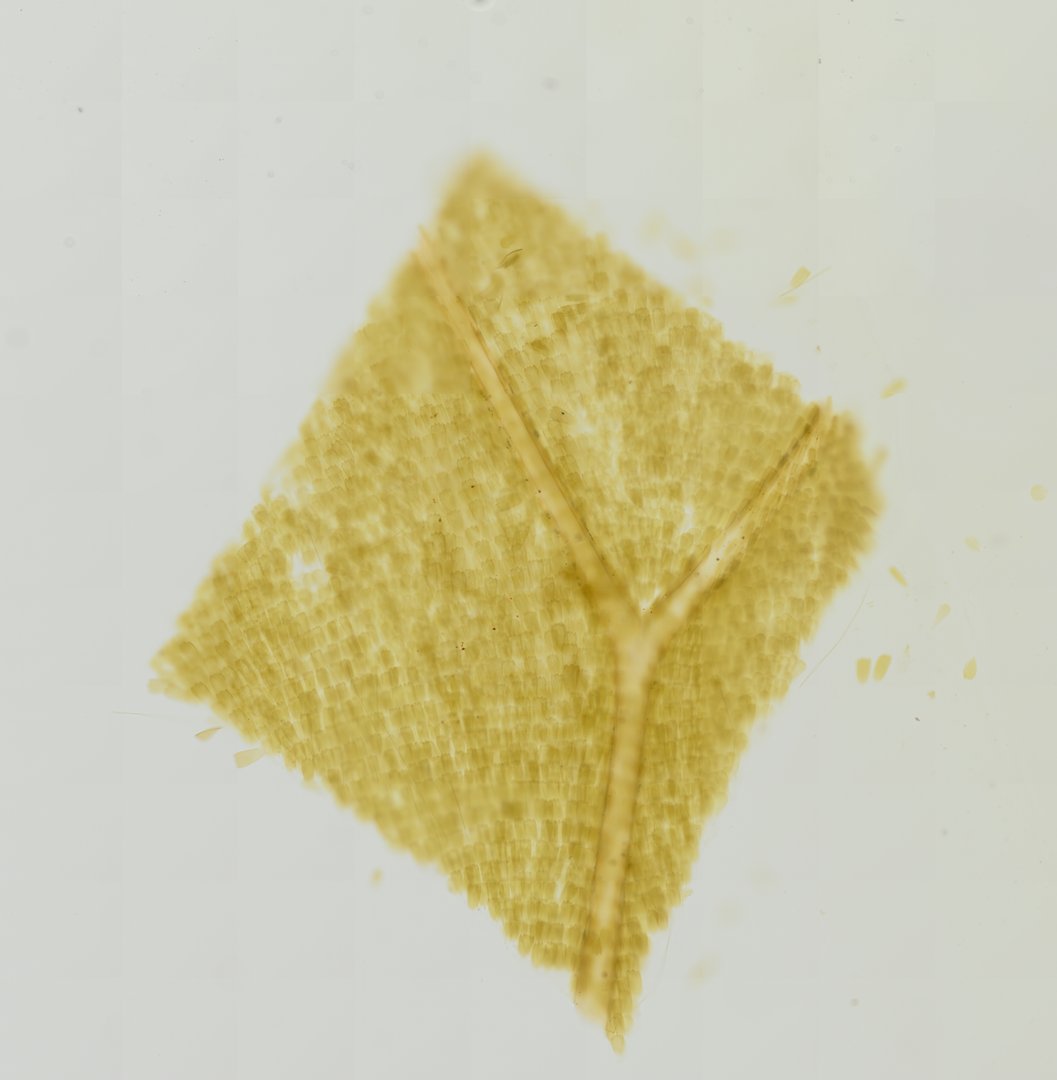
This is a piece of butterfly wing mounted whole and unstained. The surface is covered in tiny overlapping scales, the feature that gives butterflies and moths (order Lepidoptera, meaning "scale wing") their name and their color.
This is a whole mount of a small piece of butterfly wing (order Lepidoptera), with no stain added. The wing is covered in thousands of tiny, flat scales that overlap in rows like shingles on a roof. Many scales have a toothed tip and fine ridges running along their length. The scales sit on a thin wing membrane, and a branching vein runs through the piece, adding strength. The colors of a butterfly wing come from these scales, through pigments and through the way their tiny ridges bend light.
What to look for
- Scales: Tiny flat plates covering the wing, each shaped like a paddle with a toothed tip.
- Overlapping rows: Scales laid in neat rows that overlap like shingles on a roof.
- Scale sockets: Small pits in the membrane where each scale's narrow stalk attaches.
- Wing veins: Pale tubes running through the wing that stiffen it for flight. On this piece, two veins meet in a Y.
- Wing membrane: The thin, clear sheet underneath, visible where scales have rubbed off.
Questions and answers
What does a butterfly wing look like under a microscope?
Under a microscope, a butterfly wing is covered in thousands of tiny, flat scales arranged in overlapping rows like roof shingles. Each scale is a single color, and together they form the patterns you see on the whole wing.
What happens when you touch a butterfly wing?
The powder that rubs off on your fingers is actually loose scales. Each scale sits in a small socket and comes away easily. A butterfly can still fly after losing some scales, but it cannot grow new ones.
Where do butterfly wing colors come from?
Some colors come from pigments inside the scales. Others, like shiny blues and greens, come from tiny ridges on the scales that reflect light in a certain way, called structural color.
- Category
- Invertebrates
- Scan magnification
- 20x
Viewing this slide in class
This is a scan of a real prepared slide, not a simulation or a drawing. On StudyScope you can pan from the whole slide down to individual structures, always in focus, and measure them in real micrometers with the calibrated ruler. Present it live and every student screen follows your view and annotations. Students join with a room code on Chromebooks, iPads, or any browser, with no accounts.