Honeybee Antenna Under the Microscope
Honeybee Antenna (Whole Mount), Apis mellifera
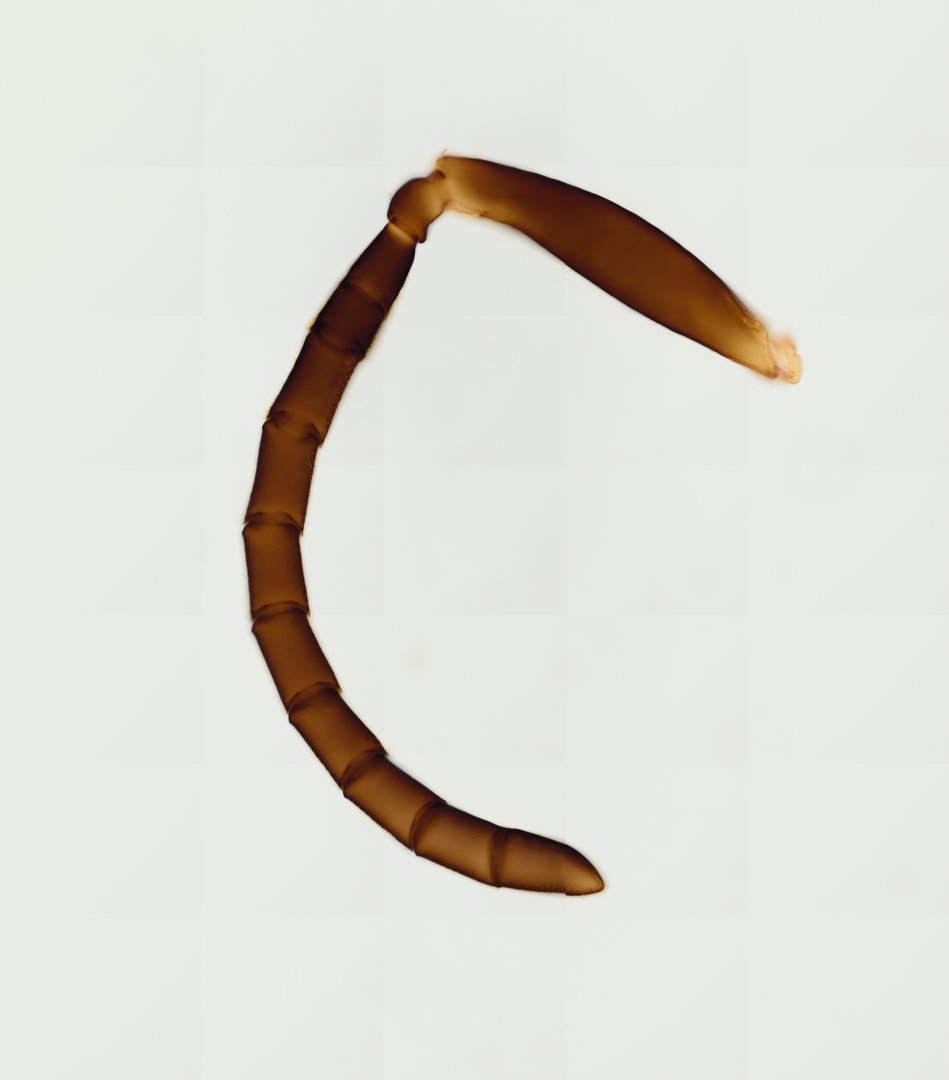
This is a honeybee antenna mounted whole and unstained. It shows the elbowed antenna shape that bees and ants share, and the segments that carry thousands of tiny smell sensors.
A whole mount (W.M.) preparation of a honeybee antenna (labeled Honeybee antenna W.M.). The specimen clearly highlights the geniculate (elbowed) insect antenna structure, including the elongated basal scape, the small pedicel, and the multi-segmented flagellum equipped with olfactory sensilla.
What to look for
- Scape: The long first segment at the base of the antenna.
- Pedicel: A short segment at the elbow, where the antenna bends.
- Flagellum: The long outer part made of many short segments.
- Sensilla: Tiny hairs, pegs, and plates on the flagellum that detect smells and touch.
At each magnification
Low power (about 4x)
The whole antenna with its elbow bend.
Medium power (about 10x)
The separate segments of the flagellum.
High power (about 40x)
Fine sensory hairs and pits on the surface of the segments.
Questions and answers
What are the parts of a honeybee antenna?
A honeybee antenna has three main parts: the long scape at the base, the small pedicel at the bend, and the flagellum, a chain of short segments. The bend between the scape and flagellum is why it is called an elbowed antenna.
What do honeybees use their antennae for?
Honeybees use their antennae to smell flowers, recognize nestmates, and sense touch, temperature, and humidity inside the hive.
- Category
- Invertebrates
- Scan magnification
- 20x
- Stain
- Unstained
- Tags
- Honeybee antenna w.m., Honeybee antenna W.M., Honeybee antenna whole mount, Honeybee antenna, Apis mellifera, Honeybee
Viewing this slide in class
This is a scan of a real prepared slide, not a simulation or a drawing. On StudyScope you can pan from the whole slide down to individual structures, always in focus, and measure them in real micrometers with the calibrated ruler. Present it live and every student screen follows your view and annotations. Students join with a room code on Chromebooks, iPads, or any browser, with no accounts.