Honeybee Foreleg Under the Microscope
Honeybee Foreleg (Whole Mount), Apis mellifera
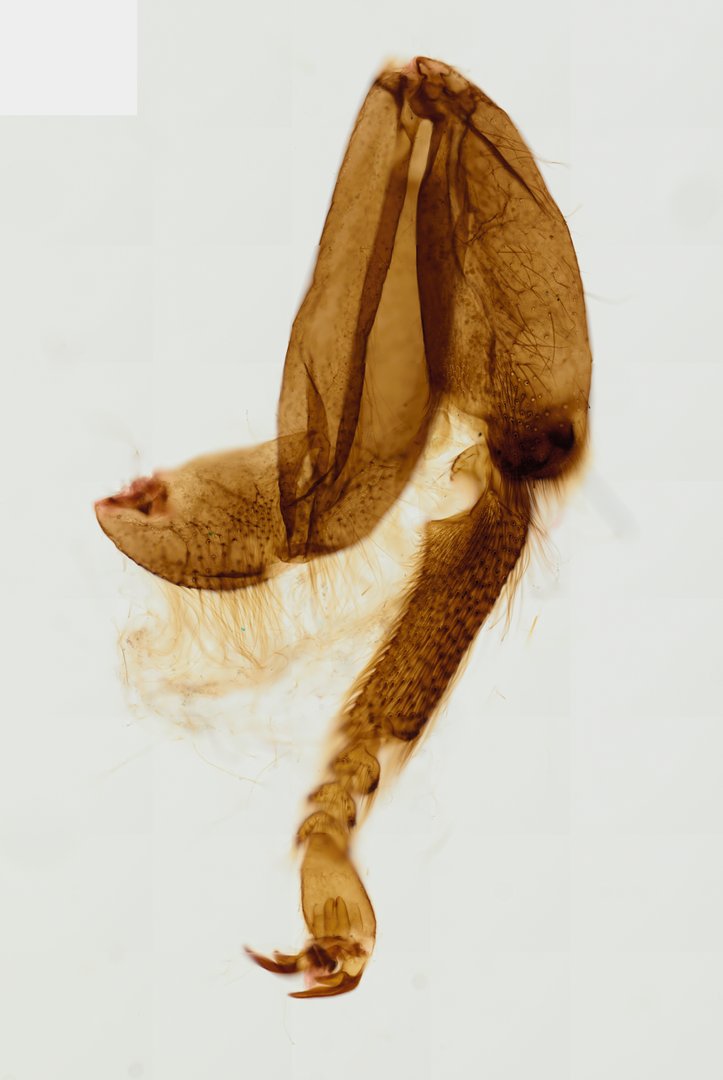
This is a honeybee front leg mounted whole and unstained. It is known for the antenna cleaner, a small notch and comb the bee uses to clean its antennae.
A whole mount (w.m.) preparation of a honeybee foreleg. The slide highlights specialized adaptations for grooming, notably the antenna cleaner (a semicircular notch on the basitarsus covered with fine comb-like bristles, closed by a velum projecting from the tibia) along with dense eye brushes and terminal tarsal claws.
What to look for
- Antenna cleaner: A half-circle notch near the joint between the tibia and the first foot segment, lined with a comb of fine bristles.
- Velum: A small flap on the tibia that closes over the notch.
- Basitarsus: The first and largest foot segment, which holds the notch.
- Tarsal segments and claws: Smaller foot segments ending in a pair of claws.
- Hairs: Dense hairs covering the leg, used for grooming.
At each magnification
Low power (about 4x)
The whole leg with its joints and hairy surface.
Medium power (about 10x)
The notch of the antenna cleaner and the flap that closes it.
High power (about 40x)
The row of comb-like bristles inside the notch.
Questions and answers
What is the antenna cleaner on a honeybee leg?
The antenna cleaner is a round notch on the front leg lined with fine bristles. The bee pulls its antenna through the notch, and the bristles scrape off pollen and dirt so the antenna can sense smells clearly.
How are the three pairs of honeybee legs different?
The front legs carry the antenna cleaner, the middle legs help with walking and moving pollen, and the hind legs of workers carry the pollen basket. Comparing them shows how one body part can be adapted for different jobs.
- Category
- Invertebrates
- Scan magnification
- 20x
- Stain
- Unstained
- Tags
- Honeybee foreleg w.m., Honeybee Foreleg w.m., Honeybee foreleg whole mount, Apis mellifera, Honeybee, Hymenoptera
Viewing this slide in class
This is a scan of a real prepared slide, not a simulation or a drawing. On StudyScope you can pan from the whole slide down to individual structures, always in focus, and measure them in real micrometers with the calibrated ruler. Present it live and every student screen follows your view and annotations. Students join with a room code on Chromebooks, iPads, or any browser, with no accounts.