Housefly Mouth Parts Under the Microscope
Housefly Mouth Parts (Whole Mount), Musca domestica
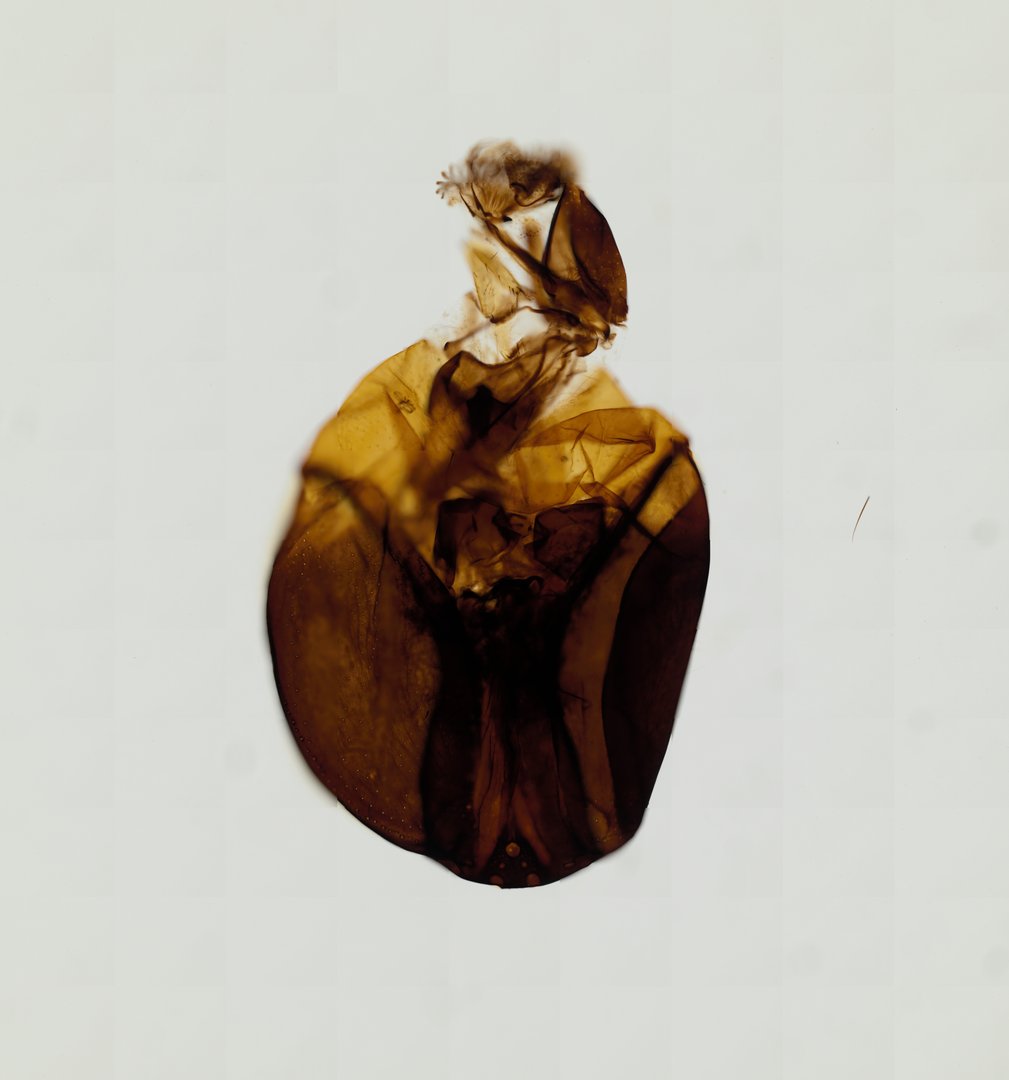
This slide shows the mouthparts of a house fly, mounted whole and unstained. Flies have sponging mouthparts that soak up liquid food instead of chewing or piercing.
A whole mount (W.M.) preparation of the sponging-lapping mouthparts of a housefly, Musca domestica. The specimen features the proboscis structure composed of the basal rostrum, tubular haustellum, and distal expanded labellum bearing pseudotracheae designed for channeling liquid nutrients.
What to look for
- Proboscis: The whole mouthpart structure hanging below the head.
- Rostrum: The base section of the proboscis, attached to the head.
- Haustellum: The middle, tube-like section.
- Labellum: The wide, sponge-like pad at the tip.
- Pseudotracheae: Fine grooves across the labellum that channel liquid toward the mouth.
At each magnification
Low power (about 4x)
The whole proboscis with the wide pad at the end.
Medium power (about 10x)
The two lobes of the labellum and the grooves across them.
High power (about 40x)
The fine ringed pattern of the pseudotracheae.
Questions and answers
What type of mouthparts does a house fly have?
House flies have sponging (sponging-lapping) mouthparts. They press the spongy labellum onto food, soak up liquid through tiny grooves, and draw it up the proboscis. They cannot bite or pierce.
How do house flies eat solid food?
House flies spit saliva onto solid food to start dissolving it, then sponge up the liquid with their labellum.
- Category
- Invertebrates
- Scan magnification
- 20x
- Stain
- Unstained
- Tags
- Housefly Mouth Parts W.M., Housefly mouthpart whole mount, Musca domestica, Housefly, Diptera, Arthropoda
Viewing this slide in class
This is a scan of a real prepared slide, not a simulation or a drawing. On StudyScope you can pan from the whole slide down to individual structures, always in focus, and measure them in real micrometers with the calibrated ruler. Present it live and every student screen follows your view and annotations. Students join with a room code on Chromebooks, iPads, or any browser, with no accounts.