Locust Wing Under the Microscope
Locust Wing (Whole Mount), Locusta migratoria
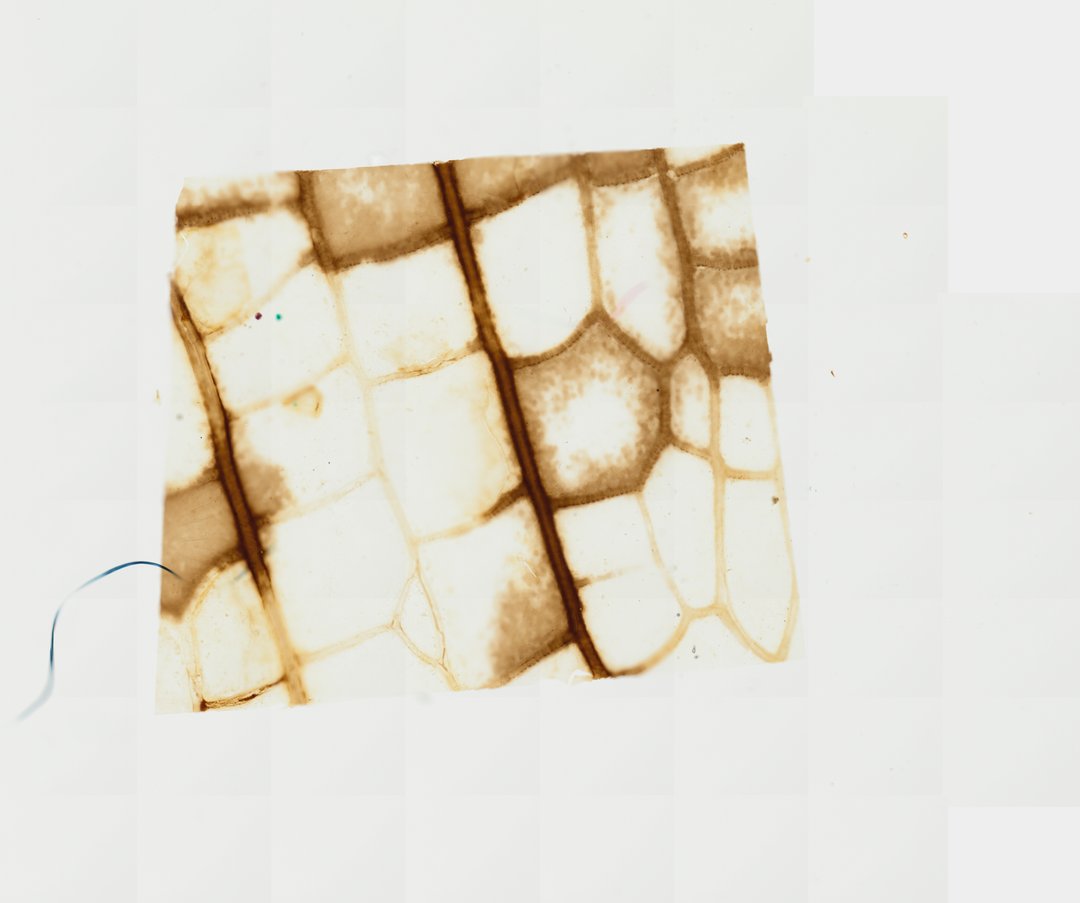
This slide shows part of a locust wing mounted whole and unstained. Locust wings are strengthened by a dense net of veins, which helps them fly long distances in swarms.
A whole mount (W.M.) preparation of a section of locust wing (labeled Locusts Wings W.M.). The specimen shows translucent orthopteran wing membrane reinforced by robust, dark-pigmented longitudinal veins and smaller cross-veins forming a reticulated cellular pattern.
What to look for
- Wing membrane: The thin, see-through sheet between the veins.
- Longitudinal veins: Thick, dark veins running along the length of the wing.
- Cross veins: Smaller veins linking the long veins.
- Cells: The many small enclosed areas that give the wing a net-like look.
At each magnification
Low power (about 4x)
A net of dark veins across a light membrane.
Medium power (about 10x)
The pattern of main veins and cross veins.
High power (about 40x)
The texture of the veins and membrane.
Questions and answers
What does a locust wing look like under a microscope?
A locust wing is a thin membrane supported by thick, dark main veins and many smaller cross veins, forming a net-like pattern of small cells.
How are grasshopper and locust front and hind wings different?
The front wings are narrow and leathery and protect the hind wings when resting. The hind wings are broad, thin, and fold like a fan under the front wings.
- Category
- Invertebrates
- Scan magnification
- 20x
- Stain
- Unstained
- Tags
- Locusts wings w.m., Locust Wing W.M., Locust wing whole mount, Locust wing, Locusta migratoria, Locust
Viewing this slide in class
This is a scan of a real prepared slide, not a simulation or a drawing. On StudyScope you can pan from the whole slide down to individual structures, always in focus, and measure them in real micrometers with the calibrated ruler. Present it live and every student screen follows your view and annotations. Students join with a room code on Chromebooks, iPads, or any browser, with no accounts.