Human Blood Smear Under the Microscope
Human Blood Smear, Homo sapiens
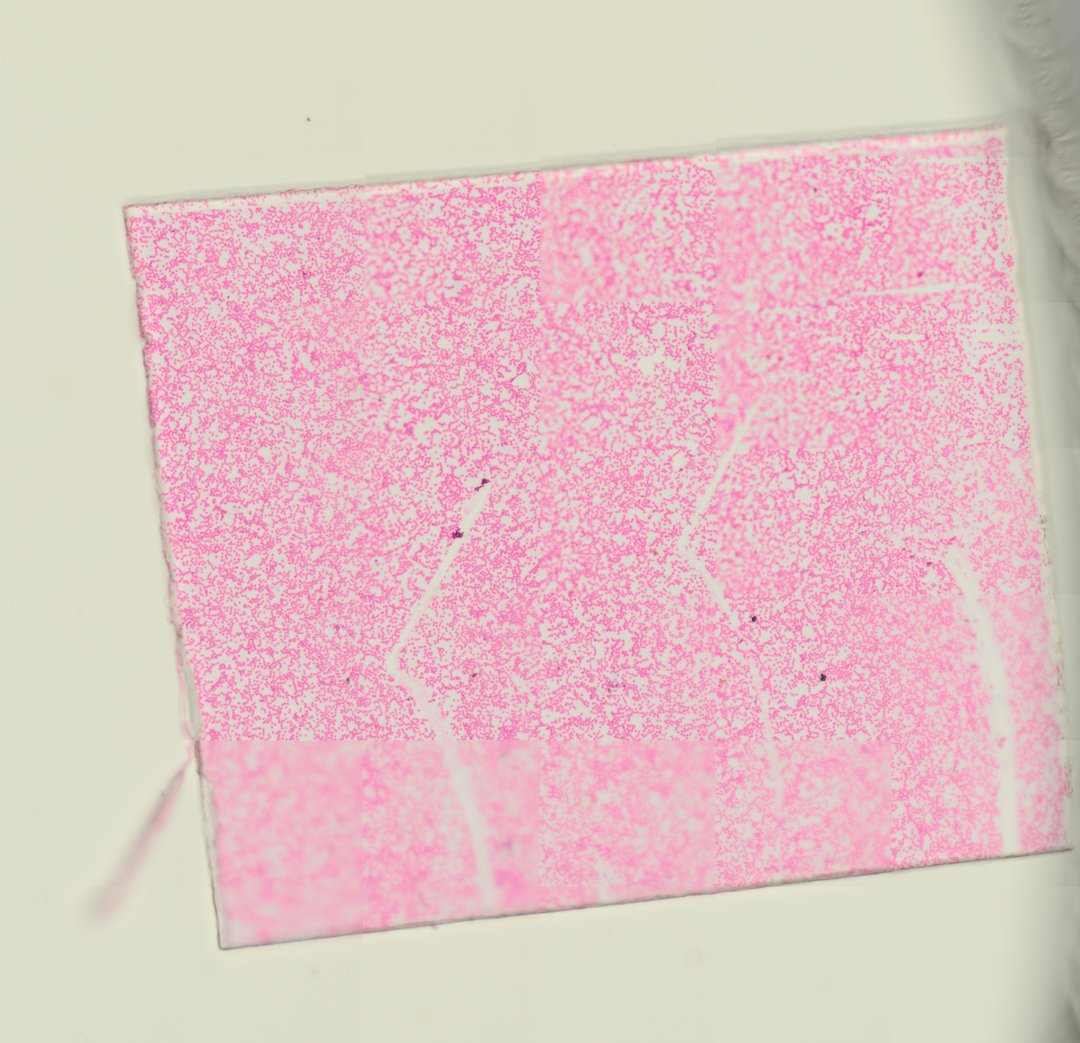
This is a thin smear of human blood stained with Wright-Giemsa. It is the standard slide for identifying red blood cells, the different types of white blood cells, and platelets.
A peripheral human blood smear preparation stained with Wright-Giemsa. The field displays abundant anucleate, biconcave red blood cells (erythrocytes) forming the background, along with scattered nucleated white blood cells (leukocytes) and small cellular fragments (platelets / thrombocytes).
What to look for
- Red blood cells: Round, pink cells with no nucleus and a paler center, filling most of the slide.
- Neutrophils: The most common white blood cell, with a purple nucleus split into several lobes.
- Lymphocytes: Small white blood cells with a large, round, dark nucleus and a thin rim of blue cytoplasm.
- Monocytes: The largest white blood cells, with a kidney- or bean-shaped nucleus.
- Eosinophils and basophils: Less common white blood cells with orange-red granules (eosinophils) or dark purple granules (basophils).
- Platelets: Tiny purple fragments scattered between the red blood cells.
At each magnification
Low power (about 4x)
A thin pink film, with a few purple dots where white blood cells are.
Medium power (about 10x)
Hundreds of red blood cells and scattered white blood cells with purple nuclei.
High power (about 40x)
The shape of each white blood cell's nucleus, which is the main way to tell them apart.
Questions and answers
What does human blood look like under a microscope?
Human blood is mostly small, round, pink red blood cells with pale centers and no nucleus. Scattered among them are larger white blood cells with purple nuclei and tiny purple platelets.
How do you identify white blood cells on a blood smear?
Look at the nucleus and granules. Neutrophils have a lobed nucleus, lymphocytes have a big round nucleus, monocytes have a bean-shaped nucleus, eosinophils have orange-red granules, and basophils have dark purple granules.
How big are human red blood cells?
Human red blood cells are about 7 to 8 micrometers across. Because their size is so consistent, they are handy for estimating the size of other cells on a slide.
- Category
- Forensic Sciences
- Scan magnification
- 20x
- Stain
- Wright-Giemsa
- Tags
- Human blood smear, Human blood, Homo sapiens, Erythrocytes, Red blood cells, Leukocytes
Viewing this slide in class
This is a scan of a real prepared slide, not a simulation or a drawing. On StudyScope you can pan from the whole slide down to individual structures, always in focus, and measure them in real micrometers with the calibrated ruler. Present it live and every student screen follows your view and annotations. Students join with a room code on Chromebooks, iPads, or any browser, with no accounts.