Short answer: Look at the space between the gut and the body wall. A flatworm such as planaria has none: solid tissue fills the body, so it is an acoelomate. A roundworm such as Ascaris has an open body cavity that is not fully lined with tissue, a pseudocoelom. An earthworm has a true coelom, a fluid-filled cavity lined on both sides, with muscle around the gut as well as in the body wall. One cross section of each shows the three body plans.
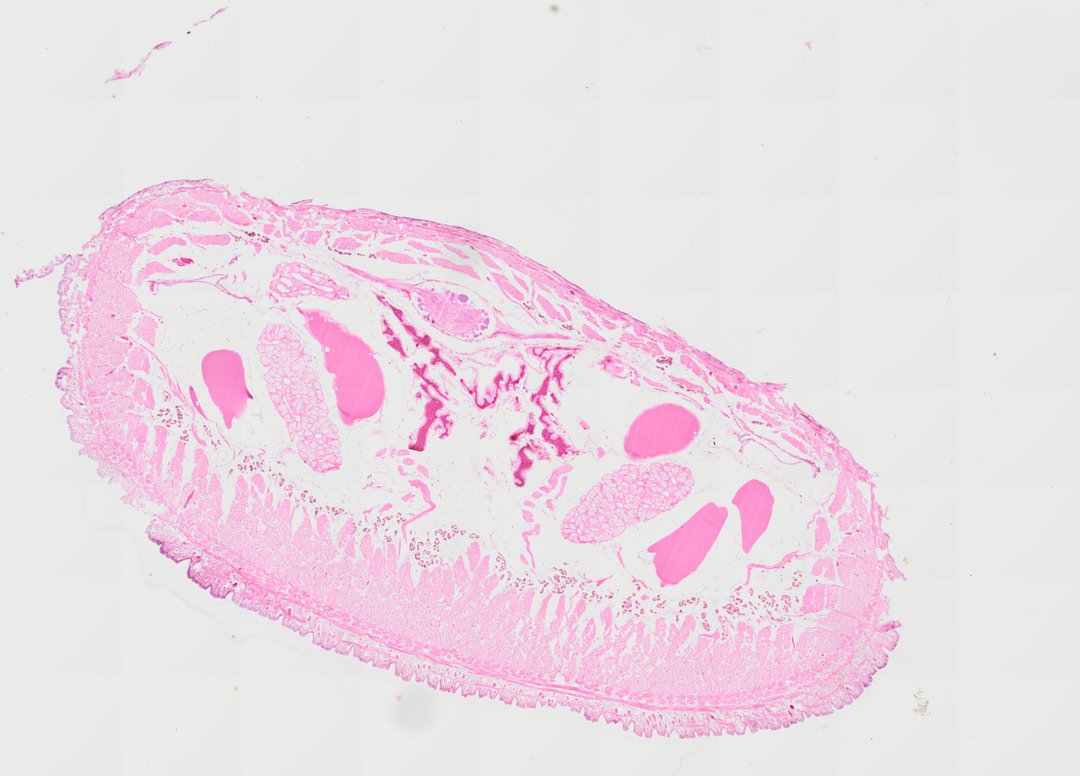
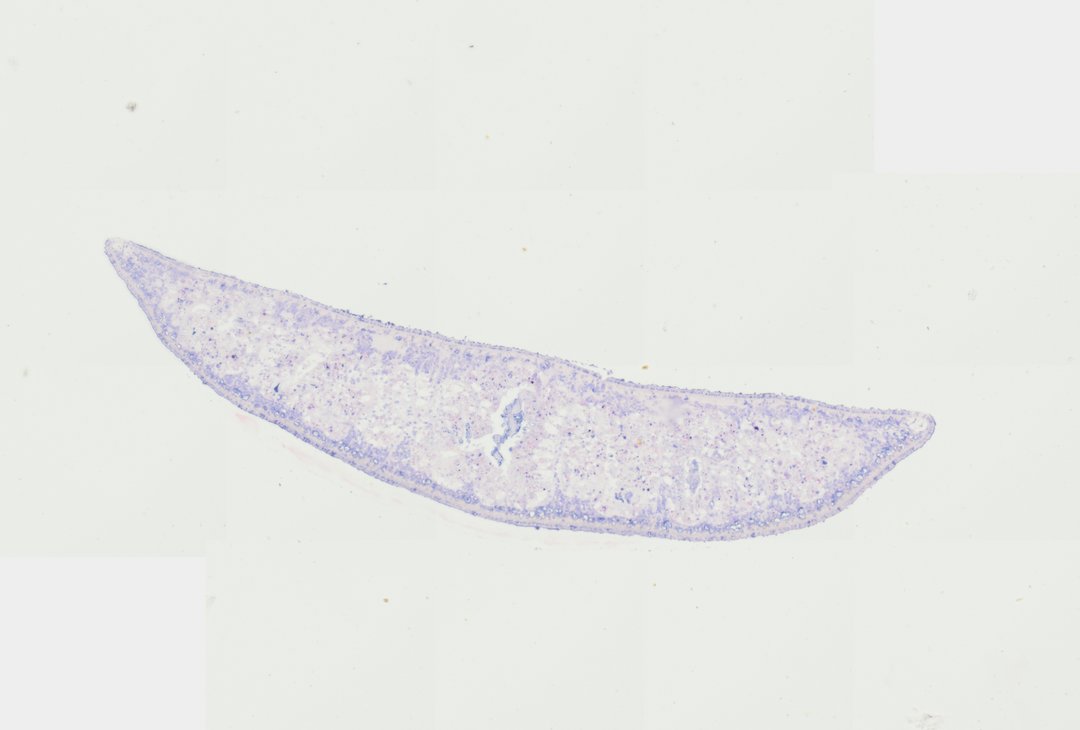 Planaria (Transverse Section)Dugesia
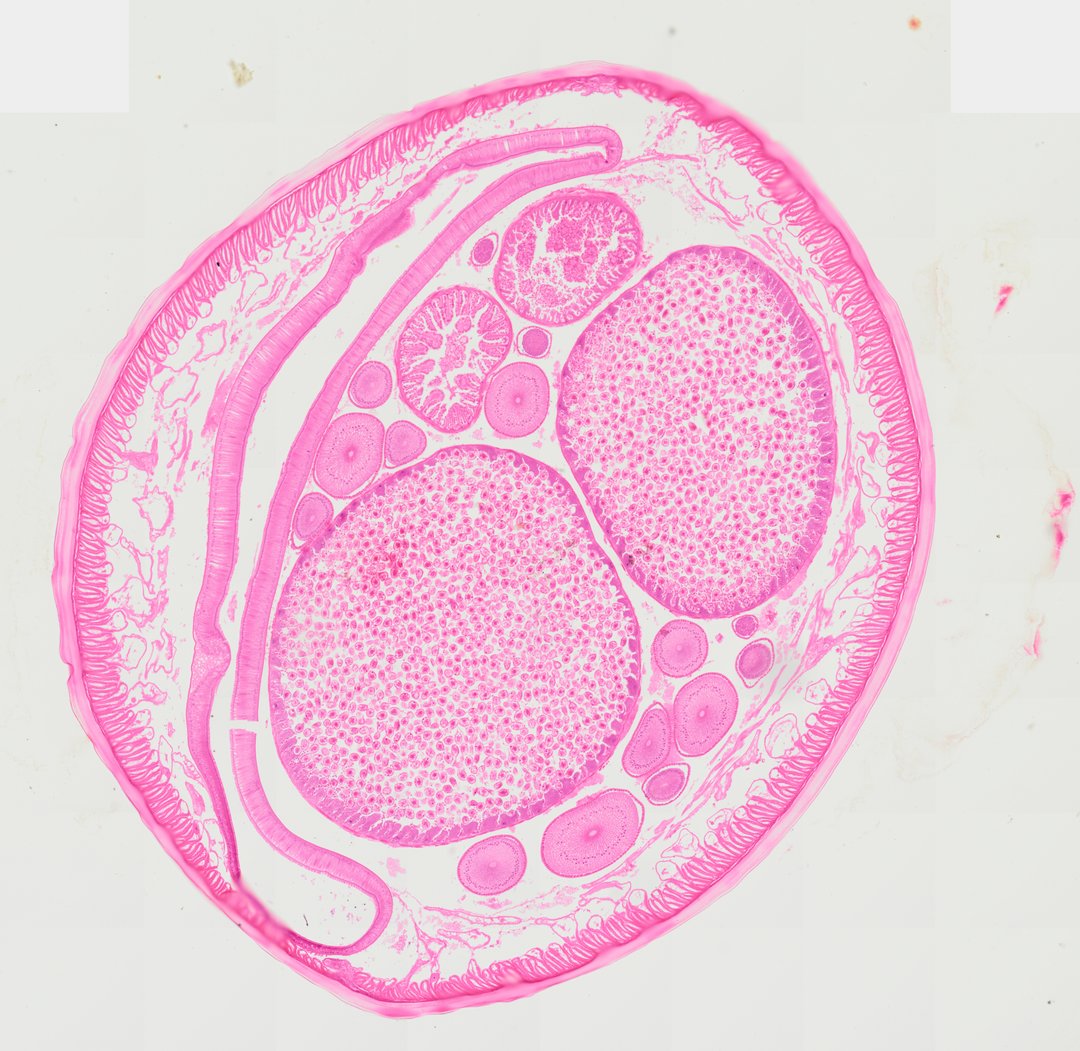 Ascaris Female (Cross Section)Ascaris lumbricoidesH&E
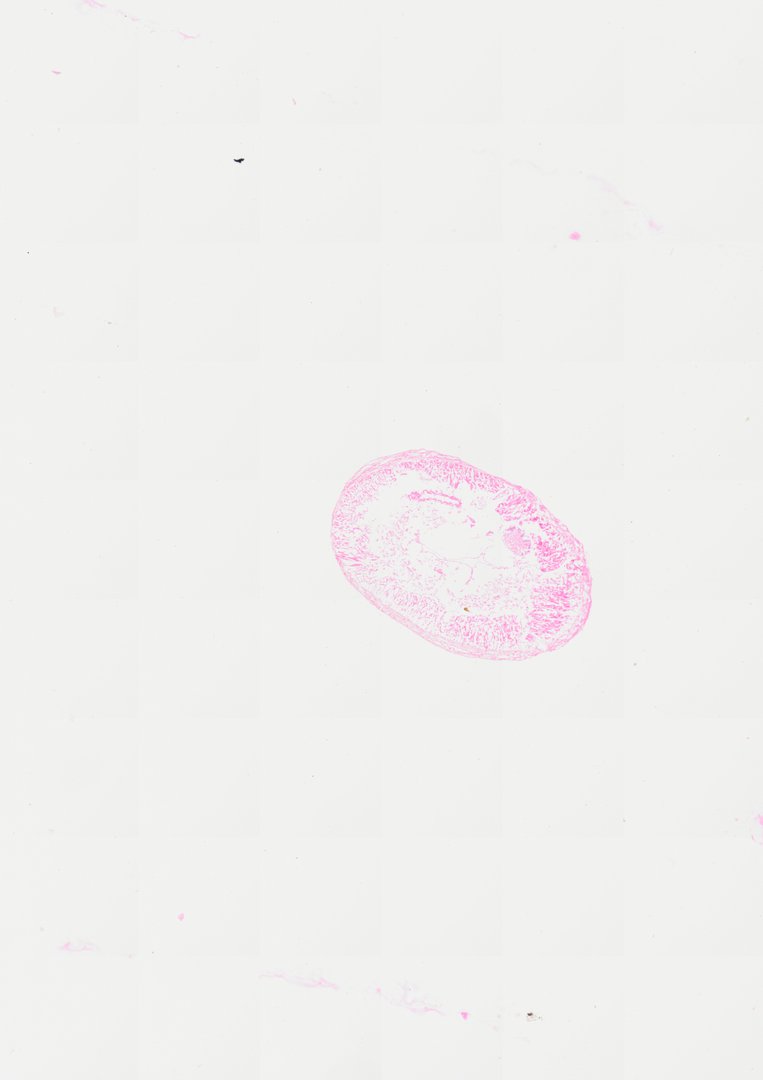 Earthworm (Cross Section)Lumbricus terrestrisH&E
Acoelomate vs pseudocoelomate vs coelomate
| Feature | Acoelomate | Pseudocoelomate | Coelomate |
|---|---|---|---|
| Example slide | Planaria (flatworm) | Ascaris (roundworm) | Earthworm (segmented worm) |
| Body cavity | None; loose tissue (parenchyma) fills the body | Open cavity, lined only on the body-wall side | True coelom, lined on both sides |
| Outer covering | Thin epidermis | Thick, nonliving cuticle | Thin cuticle over the epidermis |
| Body wall muscle | Thin layers under the epidermis | One band of long muscle cells | Circular muscle, then thick longitudinal muscle |
| Shape in section | Wide and flat | Round | Round |
What to look for in each worm
Planaria (acoelomate)
- Flat body: a thin, wide section. Being flat lets oxygen reach every cell by diffusion.
- Parenchyma: loose tissue where a body cavity would be.
- Gut branches: several small spaces lined with cells, cut through the branched gut.
Ascaris (pseudocoelomate)
- Cuticle: a thick, smooth, pink outer layer with no cells in it.
- Muscle cells: tall cells lining the body wall and bulging into the cavity.
- Pseudocoelom: the open space around the organs.
- Reproductive tubes: the female is packed with egg-filled uteri; the male has smaller tubes of developing sperm instead.
Earthworm (coelomate)
- Two muscle layers: a thin ring of circular muscle, then thick longitudinal muscle in feather-like bundles. They work against each other so the worm can crawl.
- Coelom: the body cavity inside the muscle wall.
- Gut: on this slide the intestine is torn and only partly present, so the body wall is the part to study closely.
More worms to compare
- Tapeworm: another flatworm, with no mouth or gut at all. It absorbs food through its outer covering.
- Leech: a segmented worm like the earthworm, but its coelom is mostly filled in with muscle and tissue.
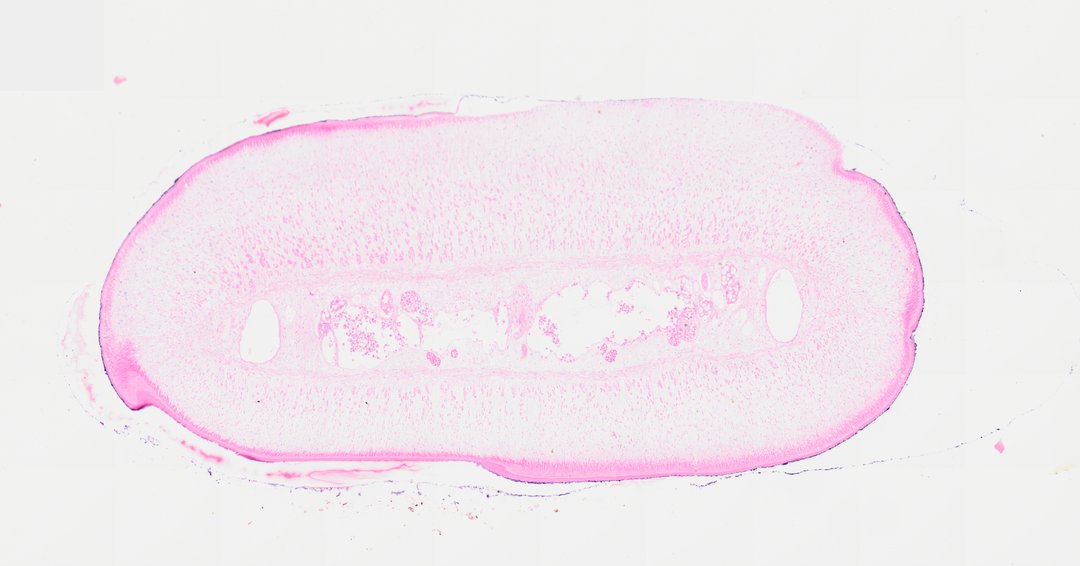
Present the three cross sections live and ask students to find the body cavity in each before naming the body plan. Students join with a room code, with no accounts. Browse the catalog without an account.
Questions and answers
What is the difference between acoelomate, pseudocoelomate and coelomate?
It is about the body cavity. Acoelomates, like flatworms, have none. Pseudocoelomates, like roundworms, have a cavity lined with tissue only on the body-wall side. Coelomates, like earthworms, have a true coelom lined with tissue on both sides, around the gut too.
What does an earthworm cross section look like under a microscope?
A round section with a thin cuticle and skin, a thin ring of circular muscle, thick longitudinal muscle in feather-like bundles, and the coelom around the intestine. The intestine often has a fold, the typhlosole, dipping in from the top.
How do you tell a male Ascaris from a female in cross section?
A female is filled with large uterus tubes packed with eggs and many small ovary tubules. A male shows smaller tubes of the testis and sperm duct, and no eggs.
Why are flatworms flat?
Flatworms have no blood vessels or body cavity to move oxygen around. A flat body keeps every cell close to the surface, so oxygen can reach it by diffusion.
More guides
- Monocot vs dicot stems compared
- Frog, human, chicken and fish blood compared
- Virtual microscope, simulator or digital microscope?
- Using a microscope on a Chromebook
- How to identify the stages of mitosis in an onion root tip
- Cheek cells vs onion cells
- Leaf layers and stomata guide
- Pond water organisms identification guide
- How to identify tissue types
- How to measure cell size
- Lily, pine and luffa pollen compared
- Insect mouthparts compared